

The best outdoor garden design doesn’t consider the backyard a room unto itself. It pretends it’s another room, and just happens to not have walls a ceiling. The part and parcel of this is making that transition from the inside to the outside so seamlessly that visitors don’t notice it.
Start with the threshold
The step from your inside living room to outside deck is more impactful than you might think. Your brain recognizes that boundary, and if you step down even slightly, you’re now officially “outside.” You’re separate from nature now. It’s time to get eaten up by bugs.
Preventing or reducing that oh-so-destructive level change (through some careful deck design or raised garden hardscaping) can create a more seamless transition between in and out. When both surfaces are at the same height, your brain has less of an easy time distinguishing between the two areas, and thus they read as one nice large one. Bifold or sliding doors can assist with this as well, since they in effect remove a visual barrier while when open, you aren’t looking through a frame but are instead standing half inside, half outside a room.
Match your material palette

Visual continuity is all about what the eye sees when it roams from your internal flooring to your external decking. If your indoor flooring is rich timber and your deck gray, weathered wood, that journey is halted at the doorway. The outside reads as different – and because our brains register ‘different’ as ‘older, rougher, separate’, it also looks wrong.
The solution isn’t problematic – or even particularly costly. It’s all about careful thinking. The stain used on exterior timber is often painlessly color-matched to your interior tones. The color and tones of your outdoor furniture can reflect or echo the interior color palette. Even just one accent color repeated in pots, cushions, or an adjacent wall can work minor miracles.
This is also why the condition of your deck is just as important as its color and material. A smooth, perfectly stained surface looks deliberate. It looks part of the plan. This is why Deck Restoration Services may be a smarter option than new furniture or a beautiful new garden. If the timber shows aging, weathering, or greyness, nothing will close the gap between that gorgeous floor inside and the unloved wood outside.
Extend the ceiling line outward
Interiors feel enclosed because of their ceiling height. Step outside and that overhead boundary disappears – which sounds freeing but can make outdoor spaces feel undefined and exposed, particularly for dining or lounging. Pergolas and verandas solve this. An overhead structure at a height that mirrors your interior ceiling creates what architects call a “covered outdoor room.” It sets the zone. It also gives you something to hang lighting from, which matters more than most garden plans account for. Eaves that extend well past the external wall do similar work at a smaller scale. They signal to the eye that this space is still part of the house.
Layer the lighting
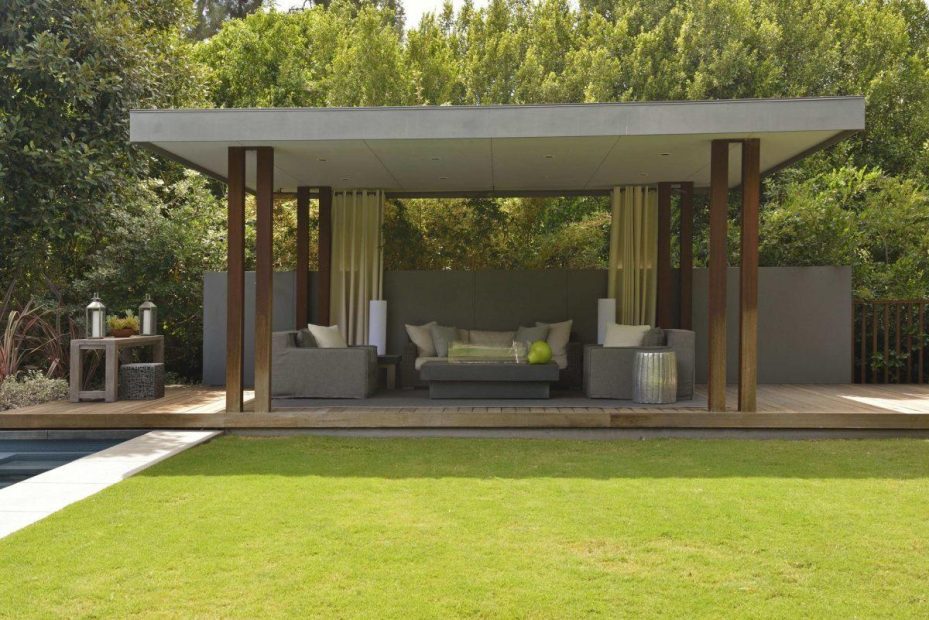
Without lighting in your garden, your windows at night are large black mirrors. The space feels small because you can’t see the garden. Low-voltage LED lighting is so commonplace now, you can figure a system into your garden design and have it installed for not much more than a regular cabled system.
Path lights, up-lights in the trees and the odd strip light running under a step are enough to keep the sightlines working at night the way they do during the day.
You don’t need a busy, high-maintenance lighting system. A couple of good-quality ground lights, one up-lighted plant and a couple of low lights in the softscaping are more than enough to keep the blackout effect at bay.
Maintain the outdoor room like a room
A deck or patio that’s neglected and allowed to weather indicates to visitors (and residents) that the outdoor area is less important. Weathering goes beyond looks. Graying wood, mold, and surface cracks form a pattern that feels “unattended” when compared to the finishes inside. The mental separation of indoors from outdoors is reinforced with every step.
A new wood deck, according to the Remodeling Impact Report (National Association of Realtors), recovers about one hundred percent of its cost at resale – landscaping is the top outdoor project for buyer appeal and enjoyment of homeowners. That’s no accident. Outdoor spaces that are maintained work differently from outdoor spaces that are not. They are used. They contribute to the house rather than sit behind it.
If you want a seamless transition from the inside to the outside, cleaning, resealing, and repairing the deck or patio are not optional maintenance tasks. It’s the least you can do.
Bring the garden into view

Zoning your outdoor area with purpose – a dining area near the doors, a lounge further out, plants framing the edges – gives the eye something to travel through rather than land on. When you’re standing in your kitchen and the garden has depth, layers, and definition, it reads as a continuation of the house rather than what’s beyond it.
The garden doesn’t need to be large. It needs to be designed with the same intention as the rooms inside.
